Walk New Haven Avenue after dark and the corridor still sounds the way it always has. A three piece is warming up inside Debauchery. Somebody's ordering the corned beef Reuben at Meg O'Malley's before last call. A comedian at Triggered Comedy Club is testing new material on a Tuesday crowd that showed up anyway. None of that is new. What's new is standing directly across the street from it: construction fencing, a leasing sign, and a building that didn't used to be there.
For years, Historic Downtown Melbourne built a nightlife strip designed for people who drove in, parked in the garage, and drove home. That's changing, and not because a new restaurant opened. It's changing because people are about to start living on top of the bars instead of just visiting them.
What's actually going up on the block
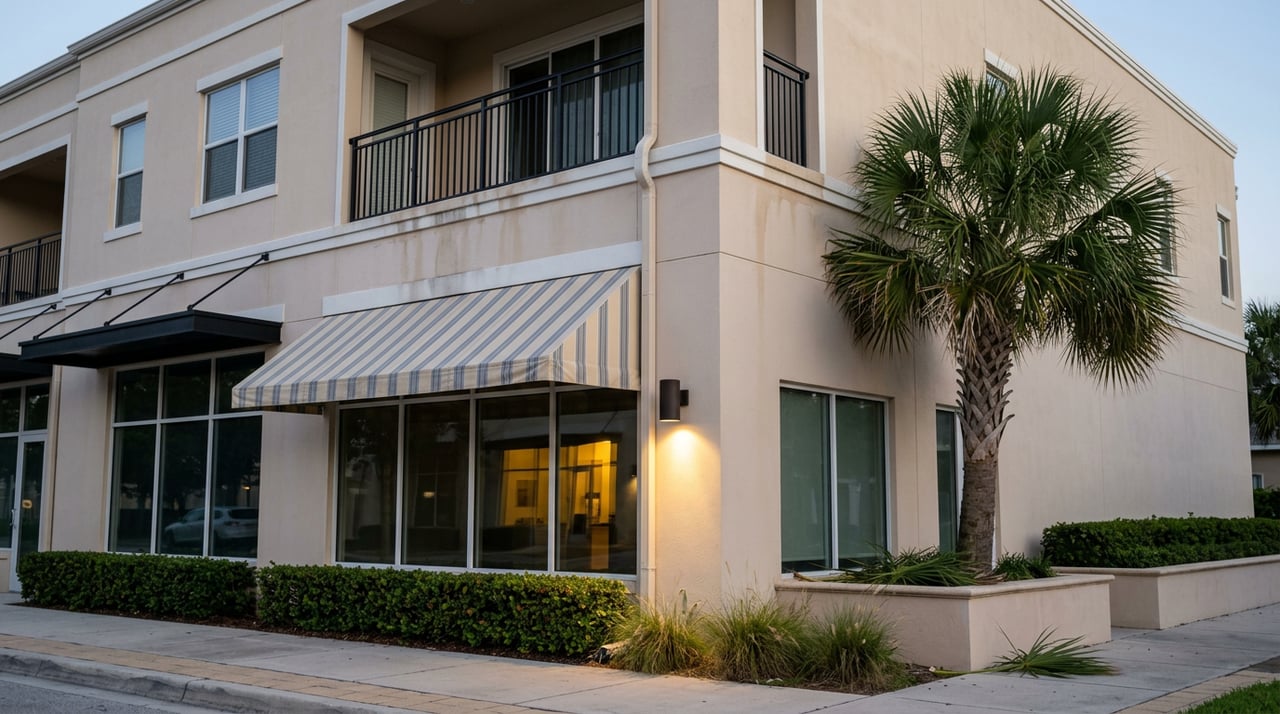
The most visible addition is Highline Apartments, a 171-unit building with ground-floor retail space built directly into the New Haven Avenue streetscape. That alone would be a notable shift for a corridor that has spent most of its recent history as a place people commute into for dinner and drinks. But it's not the only project in motion.
A commercial real estate listing for a property near 918 E New Haven Avenue, updated in August 2026, lays out the fuller picture of what's landing within a five minute walk of that address:
- Highline Apartments, 171 units with ground-floor retail
- Hotel Melby, the eleven-story, 180-room hotel with its rooftop bar The Landing, already established at 801 E Strawbridge Avenue
- A planned 197-unit multifamily development at the corner of Orange Court and Melbourne Avenue
- Two additional mixed-use projects within that same five minute radius
Stack those together and the pattern is hard to miss. Downtown Melbourne isn't adding another bar to an already crowded lineup. It's adding the residential density that a nightlife strip like this one has never actually had at scale. That's a different kind of change than a new restaurant opening, and it's the one that actually rewires how a Friday night on New Haven Avenue works.
The corridor already knew how to fill a Friday
None of this works, though, if the corridor itself isn't already carrying its weight, and New Haven Avenue has been carrying it for a long time. Melbourne Main Street, the organization that runs the downtown district, describes the strip as home to more than 40 craft restaurants and bars, which gives some sense of how much capacity already exists between Front Street and the railroad tracks.
Some of the anchors are decades old. Meg O'Malley's has been serving Irish pub fare and running its Sunday Jazz Brunch at 812 E New Haven Avenue since 2000, long enough to have become the kind of place regulars mean when they say "let's just go downtown." Debauchery, a few doors down at 807 E New Haven, books live bands seven nights a week, which is a genuinely unusual commitment for a cocktail bar in a city this size. Ember & Oak brings a steakhouse into the mix at 712 East New Haven. Hurricane Creek Saloon and Mainstreet Pub round out the stretch with the kind of live music and casual food that keeps a sidewalk busy past nine on a weeknight.
None of that changed this year. What changed is who's within stumbling distance of it.
A strip built for visitors and a strip built for residents look identical from the sidewalk. The difference only shows up in how early people arrive, how late they stay, and whether they're checking a parking app on the way out.
The Saturday constant underneath it all
The nightlife gets the attention, but the corridor's daytime rhythm has its own fixed point: the Downtown Melbourne Farmers Market, held Saturdays at Riverview Park during its main season and organized by Melbourne Main Street alongside the rest of the district's calendar. It's the kind of recurring, low key event that doesn't generate headlines but does generate habit, the errand that turns into a coffee that turns into lunch at one of the New Haven storefronts before anyone planned it that way.
That's the piece that makes the new residential density interesting rather than just numerically bigger. A market like Riverview's works because people already treat downtown as a place to walk through on a Saturday morning, not just drive into on a Friday night. Add hundreds of new units within a few blocks of that market and the Saturday crowd stops being entirely made up of people who drove somewhere to be there.
What actually shifts for people already living nearby
If you're already renting or owning within a few blocks of New Haven Avenue, the practical change isn't which restaurant to try next. It's the math on parking, noise, and foot traffic once a few hundred new neighbors are sharing the same six or eight blocks you've had mostly to yourself in the evenings.
The corridor's existing parking garage and street spaces were built around a visitor model, people who came for a few hours and left. A resident model behaves differently. It means more cars parked overnight instead of cycling through by 11 p.m. It means the sidewalk in front of Debauchery or Ember & Oak carries foot traffic later into the week, not just on Friday and Saturday. It also likely means the businesses that have relied on drive-in crowds start seeing a steadier, more local customer base, the kind that shows up on a Tuesday because it's close, not because it's an occasion.
None of this is dramatic on its own. But it's the difference between a downtown that empties out once the dinner crowd drives home and one that stays populated because the people who ate dinner there are already upstairs.
The corridor was ready before the neighbors were
New Haven Avenue didn't need to invent anything new to absorb this. Meg O'Malley's has had 26 years to build a following that treats a Sunday brunch reservation as routine. Debauchery has had enough nights of live music to become the default answer when someone asks where to go after 9 p.m. The Riverview Park market has had enough Saturdays to become a habit rather than an event.
What Highline Apartments, the Orange Court project, and the other developments landing nearby actually change is simpler than a new restaurant scene: they close the distance between the people who already built these habits and the storefronts where those habits happen. That's not a story about downtown becoming something it wasn't. It's a story about a corridor finally getting the population it was built to hold.
If you're already living in or around Historic Downtown Melbourne, keep an eye on that stretch between Strawbridge and Orange Court over the next several months. The fencing coming down usually means more than a building opening. It means more of your actual neighbors are about to be a five minute walk from the bar stool you already have a regular spot at.
For a wider look at how other pockets of Melbourne are changing, including the mural-driven rhythm across the river in the Eau Gallie Arts District, Megan Ross keeps a running read on what's actually shifting in Brevard County's neighborhoods, not just what's for sale in them.